

A cup that changes color when hot coffee hits it looks like it is telling you something useful. It is — but far less than most buyers assume. Heat sensitive cups report one thing: the outside wall has warmed up. They do not hold heat, they do not control it, and they cannot tell you what temperature the drink actually is. That single distinction is the difference between a cup you enjoy and a cup that ends up at the back of the cabinet.
What heat sensitive cups actually measure
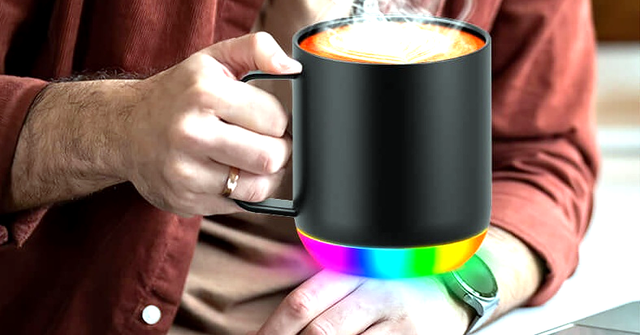
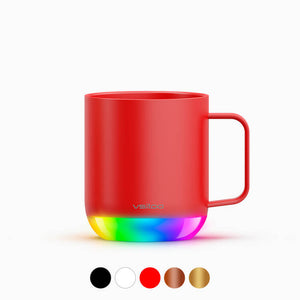
The color layer is a thermochromic pigment printed on the outside of the cup. It shifts at a set threshold and responds to the surface it sits on — the wall, not the liquid. Pour coffee at 190°F and the wall takes time to catch up, so the color arrives late and fades late: a minute or more on thick ceramic, faster on thin, where the outside also gets too hot to hold.
Why an insulated cup barely changes color at all
Here is the trap. The better a cup insulates, the less its outer wall warms up — which means the better the cup, the weaker the color effect. A double-wall vacuum body is designed to keep heat inside the wall, so the pigment on the outside sees room temperature and stays put. Buyers who want the strongest color change are effectively shopping for the worst insulation.
That is the trade written into the product: a heat sensitive cup is a mood piece with a hint of function. If your goal is a warm sip forty minutes later, color is the wrong mechanism entirely.
Where the color is genuinely worth having
There are real uses, and they are mostly social rather than thermal:
- A guest cue. The color answers "is this fresh?" without you saying a word.
- A gift moment. The reveal is the point. Color-changing ceramic reads as thoughtful in a way a plain mug does not.
- A cue for tea drinkers. A cup that visibly cools is easier to judge than one that looks identical hot or cold.
The three limits to accept before you buy
It does not hold heat. Single-wall ceramic loses temperature fast; color tells you it is cooling, not that it will stay warm.
It controls nothing. No sensor, no heater. The cup reports, it never corrects.
The effect dulls. Pigment fades with dishwasher heat and direct sun, so a vivid cup can look flat by month twelve. If the color is why you are buying, hand wash it.
If what you want is a warm sip at hour two
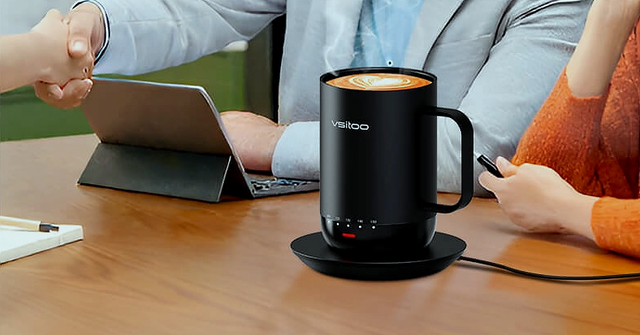
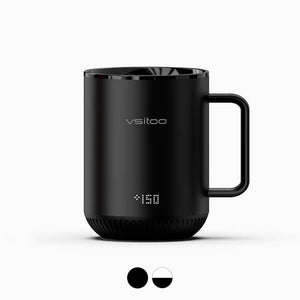
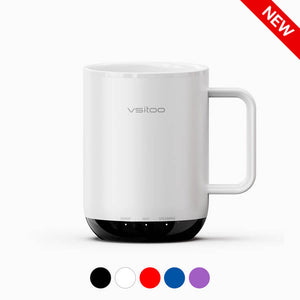
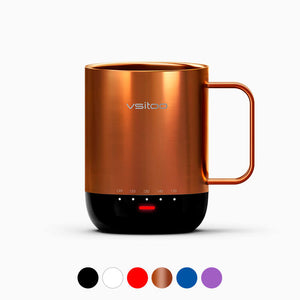
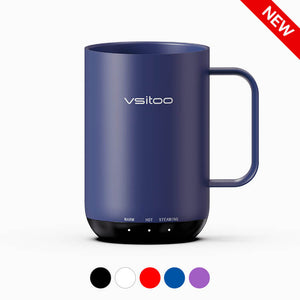
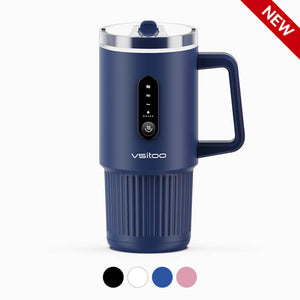
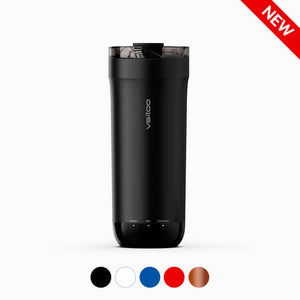
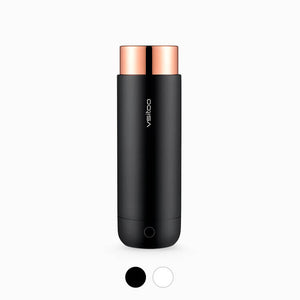
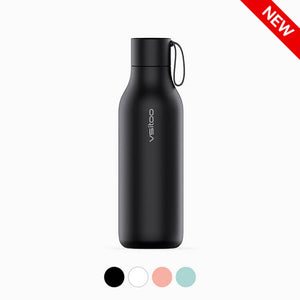
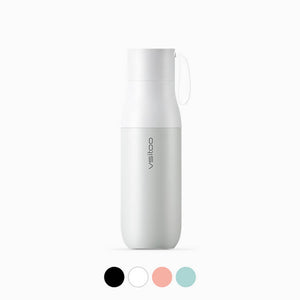
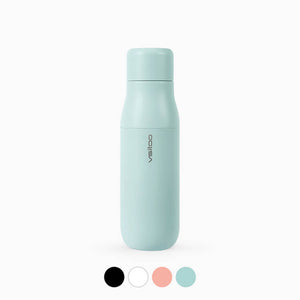
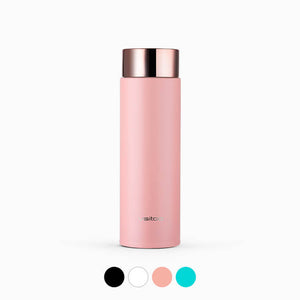
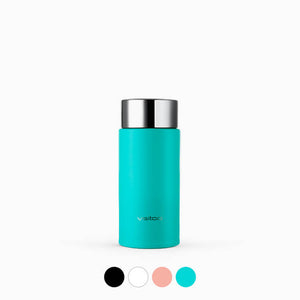
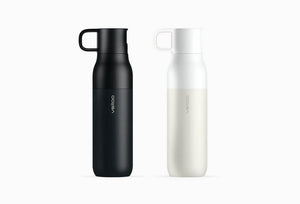
Then the mechanism has to change: you need a heated mug, not a reactive one. An insulated coffee cup with an active heat source holds a band instead of surrendering to the room. VSITOO's heated mugs use auto-sensing heat to hold a drink between 120°F and 150°F without buttons or apps — the mug reads the drink and adjusts, so the temperature at minute five and minute ninety is the same. Capacity is the main decision: 12 oz for a standard cup, 14 oz and 16 oz for a full morning pour, 20 oz for people who nurse one cup for hours.
Pair that with a 12 oz smart mug for a desk setup and the color cue stops mattering — you are no longer guessing, because the mug is holding the number for you.
What to check before you buy either one
- The threshold. Ask at what temperature the pigment shifts. A cup that changes at lukewarm tells you nothing useful about hot coffee.
- Wall construction. Single wall = visible color, hot hands. Double wall = cool hands, weak color. Pick which trade you want.
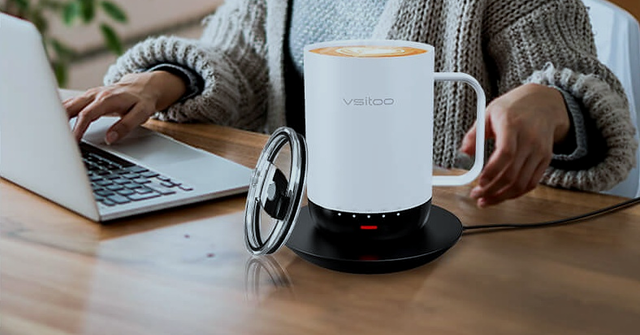
- The lid. A coffee cup with lid and handle covers more real use than a pretty open cup; a lid is what makes the cup car-safe and desk-safe.
- Cleaning shape. Wide mouths rinse in one pass. Narrow necks and printed interiors trap residue.
- Heat behaviour. If the cup is meant to keep coffee hot, confirm the temperature band, not just the word "insulated."
Both can coexist: a heat sensitive cup for mornings when the ritual matters, a heated mug for mornings when the coffee has to still be hot at 10 a.m. Cups that try to do both jobs usually do one badly.
Recommended VSITOO picks
- VSITOO S3 Pro Self-Heated Coffee Mug — 14/16 oz, holds 120–150°F by auto-sensing heat.
- VSITOO S3 Ultra Self-Heated Coffee Mug — 20 oz for long desk sessions.
- VSITOO S6 Plus Smart Coffee Mug — 12 oz, the compact option for a small desk or a gift.
Match the capacity to how much you actually pour, and let color stay a detail instead of a promise.