

Two bottles can hold the same amount of water, cost about the same, and still feel completely different in your hand. One is stainless steel, the other is glass. The material decides how heavy your bag gets, whether your water stays cold, what happens when you drop it, and whether a filter will even fit. Here is how the two actually compare.
The short answer
Glass suits a bottle that never leaves a desk: inert, easy to see through, simple to clean. Stainless steel suits a bottle that travels, because it survives drops, insulates, and accepts a filter housing. If you carry one bottle daily, steel is the practical answer.
Taste and material safety
Glass is chemically inert. It does not react with water or juice, and it will not hold the smell of yesterday's drink. Food-grade stainless steel is also non-reactive when clean; the metallic taste people describe usually comes from residue in an unwashed bottle or a gasket that has gone sour, not from the steel. Both skip the plastic liner question, which is why both are common with people avoiding BPA.
Weight versus survival on the go
Glass is heavy for its capacity, and it fails suddenly: a chip at the rim becomes a crack, and a crack becomes a wet bag. Steel fails slowly — it dents, scratches, and keeps holding water. That matters more than any spec sheet if the bottle rides in a backpack. An insulated stainless steel water bottle adds a second wall, which leads to the next difference.
Temperature and condensation
Single-wall glass sweats. Cold water pulls moisture out of the air and leaves a ring on your desk and a damp pocket in your bag. Double-wall steel with a vacuum gap keeps cold water cold for hours and the outside dry. Warm drinks behave the same way in reverse.
Filters and lids change the decision
This is where the two materials stop being interchangeable. A filtering water bottle needs a rigid neck and a housing that holds the filter under pressure while water is drawn through it. Glass bottles are usually narrow-mouth and thick-walled, so press-fit filters do not seat reliably. Every water bottle lid is also a seal, and seals fail first: a lid with one thin gasket leaks sooner than one with a seated silicone ring and a molded thread.
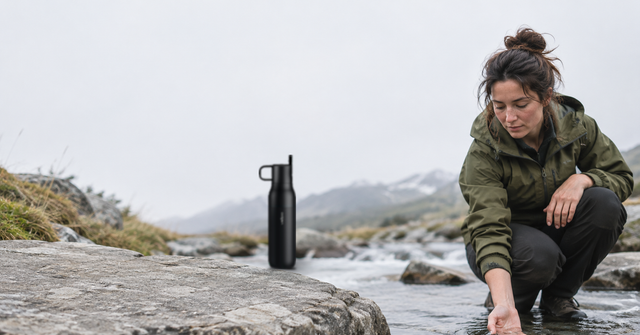
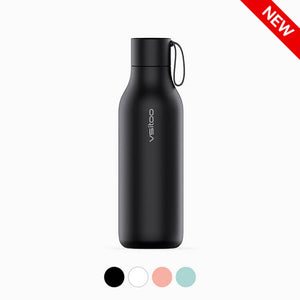
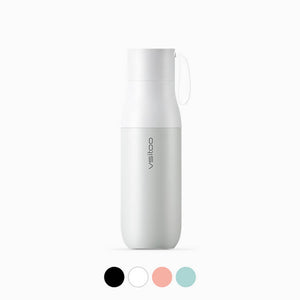
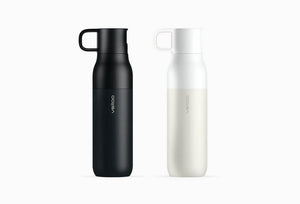
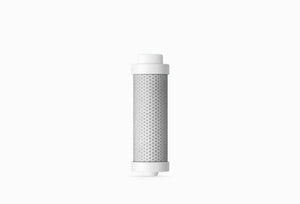
The VSITOO S2 filtered bottle shows how this is solved in steel: 25 oz of insulated body, a 5-stage filtration system built around a 0.01 μm ultrafiltration membrane, specified to reduce over 99.99% of common contaminants such as chlorine, sediment, heavy metals, and bacteria. Filters are consumables, so the replacement filter pack matters as much as the bottle. No filter turns unsafe water into safe water, and none replaces a boil notice — but for refilling from a tap, a seated filter in a steel body is the combination that works.
Capacity in real life
A 25 oz water bottle is the usual compromise: enough for a commute and a workout, light enough to carry without thinking about it. Glass lands in the same range but weighs more per ounce, and large glass bottles get awkward fast. If you refill rarely, a 33 oz steel bottle is easier to live with.
Cleaning and reuse
Can you reuse water bottles of either material? Yes, and both are better reused than replaced weekly. Glass goes in a dishwasher and stains less, but check the rim each time you dry it. Steel needs a bottle brush, a weekly gasket rinse, and a lid left open to air-dry. Neither should store juice for days, and neither should be filled with boiling liquid and sealed.
How to decide in under a minute
- Desk only, rinsed daily: glass is fine and pleasant.
- Bag, gym, commute, hiking: steel, insulated if cold water matters.
- You want filtration: steel — the housing needs a rigid neck.
- You drop things: steel, every time.
That is the whole decision. The stainless steel vs glass water bottle question is not about which material is safer — both are — it is about where the bottle spends its day.
Recommended VSITOO picks
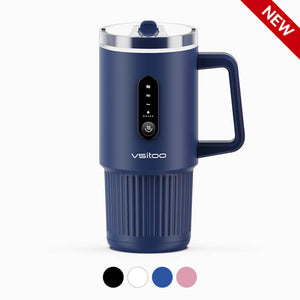
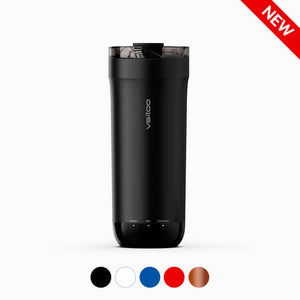
- VSITOO S2 Filtered Water Bottle — 25 oz: insulated stainless steel with a 5-stage 0.01 μm filter.
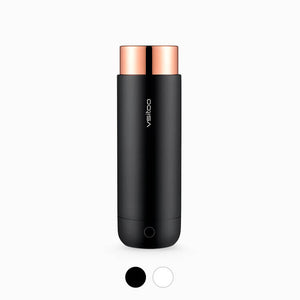
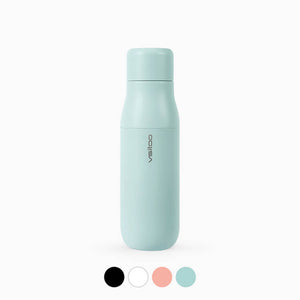
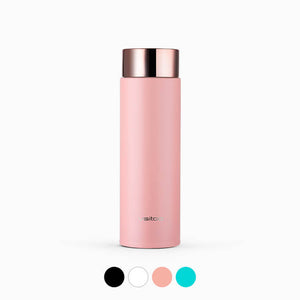
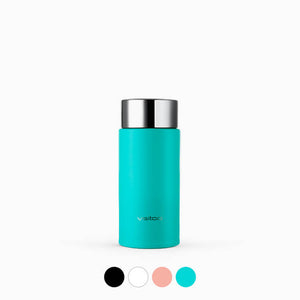
- VSITOO S1 Pro Self-Cleaning Water Bottle — 15 oz: compact stainless bottle with self-cleaning mode.
- VSITOO S1 Max Self-Cleaning Water Bottle — 33 oz: the same idea in a full-day size.