

The Real Cost of Cheap Water Filters: Why VSITOO S2 Actually Saves You Money
Let's talk about the numbers that water filter companies don't put in their ads.
A Brita pitcher filter costs about $0.17 per gallon. That sounds cheap, right? But when you actually do the math over a year of daily use for a family of four, you're looking at roughly $150 to $200 annually just on replacement filters. And that's before you factor in the bacterial buildup, the slow filtration speed, and the fact that Brita's basic carbon blocks only reduce chlorine taste and a handful of contaminants.
Then there's LARQ. Their UV-C self-cleaning bottle removes the need for replacement filters, but you're paying $100 to $150 upfront for a bottle that doesn't actually filter anything. The UV light sanitizes the water and the bottle interior, sure. But it doesn't remove sediment, heavy metals, or the organic compounds that make tap water taste like a swimming pool.
The hidden cost isn't just about dollars. It's about what you're NOT getting for your money.
The Three Hidden Costs Nobody Talks About
1. Frequent filter replacements add up fast. Brita recommends replacing your filter every 40 gallons or every two months. That's six replacements per year per filter. If you're using the 10-cup pitcher, that's about $35 to $45 in replacement filters annually for a single person. A family of four easily doubles or triples that number.
2. Bacterial growth in carbon filters is real. Here's something Brita doesn't mention: wet, warm carbon filters are a breeding ground for bacteria. Studies have found that used Brita filters can harbor significant bacterial colonies if not changed on schedule. You're not just paying for replacement filters—you're paying to avoid drinking bacteria soup.
3. UV-only solutions leave a gap. LARQ's UV-C light kills up to 99.99% of bacteria in water. Great. But it doesn't do anything about the dirt, rust, or sediment that might be in your tap water. And if your water source is cloudy or has visible particles, the UV light can't even penetrate to disinfect properly. You're paying premium money for incomplete protection.
How the VSITOO S2 Solves All Three Problems at Once
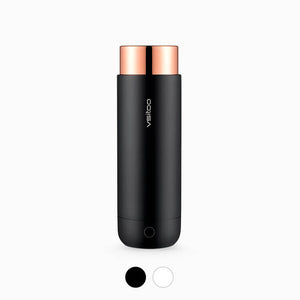
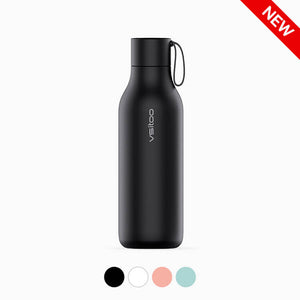
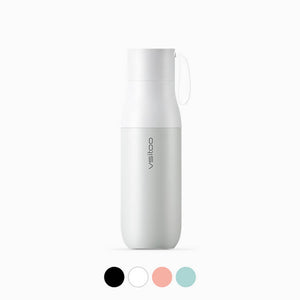
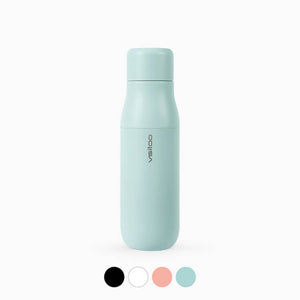
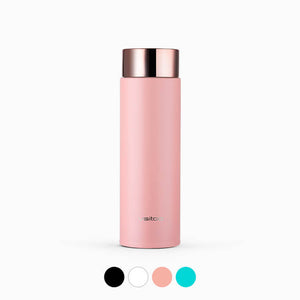
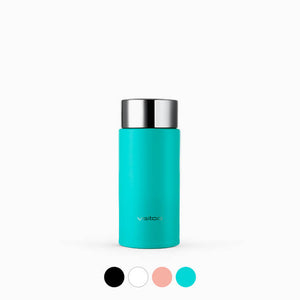
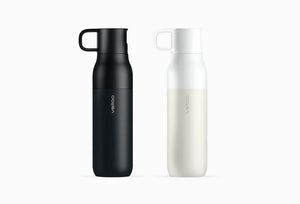
The VSITOO S2 Carbon Fiber Filtering Bottle takes a completely different approach. Instead of forcing you to choose between filtration and sterilization, it gives you both in one bottle.
Here's the cost breakdown that matters:
- $89.99 — One-time purchase of the VSITOO S2
- $0.00 — Replacement filter costs for the first 6-12 months (the carbon fiber matrix lasts significantly longer than standard carbon blocks)
- $0.00 — UV-C sterilization cycles are built-in, battery-powered, and require no consumables
Compare that to one year of Brita usage ($45 in filters + the initial pitcher cost) or one LARQ bottle ($100-$150 with no filtration). The VSITOO S2 doesn't just filter better—it costs less over time.
What You Actually Get with the VSITOO S2
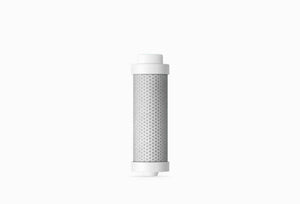
- Multi-layered carbon fiber filtration that removes sediment, chlorine, heavy metals, and organic compounds down to 0.2 microns
- Dual UV-C + UV-A sterilization that kills 99.99% of bacteria and viruses in both the water and the bottle itself
- A self-cleaning bottle that sanitizes its own interior so you don't have to scrub it out every week
- Zero ongoing filter costs — the carbon fiber matrix lasts months longer than standard carbon blocks
- No bacterial buildup — the UV sterilization cycle keeps the entire system clean between uses
The Bottom Line
Cheap water filters aren't actually cheap. They shift the cost from the initial purchase to ongoing replacements, while delivering incomplete filtration that leaves gaps in your water quality.
The VSITOO S2 costs more upfront than a Brita pitcher, but it outperforms both Brita and LARQ in every meaningful category: filtration quality, sterilization coverage, long-term cost, and convenience. When you look at the total cost of ownership over 12 months, the S2 is the most affordable option that actually does the job properly.
See the VSITOO S2 Carbon Fiber Filtering Bottle →
Learn more in our complete self heating mug guide.


Comments
Learned this the hard way buying cheap filters online. They worked for about 2 weeks then made the water taste weird. Going with the S2 now. You really do get what you pay for.