

Best Temperature to Drink Coffee: A Complete Guide to Coffee Temperature Science
You take a sip of freshly brewed coffee. It's too hot — you can barely taste anything, and your tongue feels scorched. Five minutes later, you take another sip. Now it's lukewarm and bitter. Where's the sweet spot? There's actually a science-backed answer to the best temperature to drink coffee, and it's probably not what you think.
Whether you're a morning pour-over enthusiast or an office drip-coffee drinker, understanding coffee temperature can transform your daily cup from "just caffeine" into a truly enjoyable experience. Let's break down what science says about the optimal temperature, why it matters, and how you can keep your coffee there for longer.
The Science of Taste and Temperature
Your taste buds respond differently at different temperatures. Research published in the journal Nature found that our perception of bitterness, sweetness, and acidity shifts significantly with temperature. Here's what happens:
- Above 160°F (71°C): Pain receptors dominate. You're tasting heat, not coffee. Bitterness is suppressed, but so are most subtle flavors.
- 140-160°F (60-71°C): The "danger zone" for tongue burns. Volatile aromatic compounds start fading, and acidity becomes more pronounced.
- 120-140°F (49-60°C): The optimal range. Sweetness peaks, bitterness softens, and flavor notes shine through clearly.
- Below 120°F (49°C): Bitterness resurfaces. The coffee starts tasting flat and stale as essential oils degrade.
Multiple barista studies and sensory science research converge on a clear answer: the best temperature to drink coffee is between 120-140°F (49-60°C). This is the "Goldilocks zone" where your palate picks up the most nuanced flavors without being overwhelmed by heat.
Why Baristas Recommend Waiting
Professional baristas and coffee tasters (called "cuppers") evaluate coffee at around 130-140°F. They know that drinking coffee immediately after brewing at 190-200°F masks the very flavors you paid for. Specialty coffee shops often serve their pour-overs at a temperature designed to cool slightly to this optimal range before the first sip.
The Specialty Coffee Association (SCA) recommends a brewing temperature of 195-205°F and a serving temperature around 130-140°F for the best sensory experience. This isn't pretentious coffee snobbery — it's backed by decades of sensory research.
The Practical Problem: Your Coffee Doesn't Stay in the Sweet Spot
Here's the real frustration: even if you wait the perfect 4-6 minutes for your coffee to cool to 130°F, it doesn't stay there. In a standard ceramic mug at room temperature, coffee cools at roughly 1-2°F per minute. That gives you a window of only about 10-15 minutes before your coffee dips below 120°F and starts tasting flat and bitter.
If you're someone who savors their coffee over 30-60 minutes (especially if you work from home or have a long morning routine), that narrow window is a constant battle. You're either rushing or drinking cold, bitter coffee.
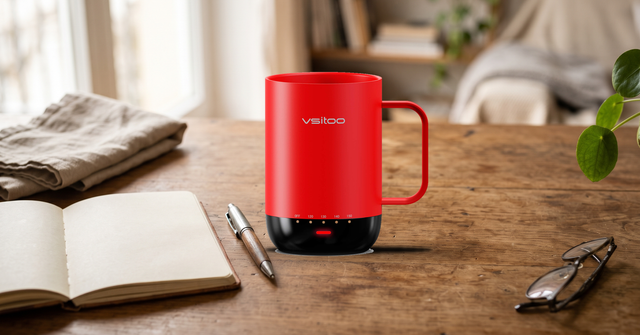
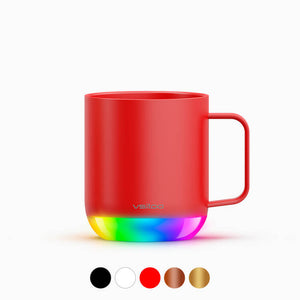
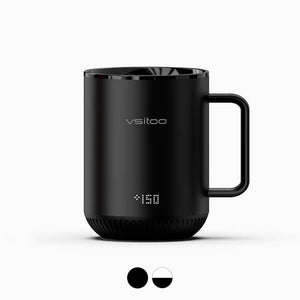
This is exactly where smart mug technology changes the game. A temperature-controlled mug maintains your coffee precisely in that 120-140°F sweet spot for as long as you want, so every sip tastes just as good as the first.
How Coffee Temperature Affects Different Brew Methods
| Brew Method | Brew Temp | Cooling Rate | Optimal Drinking Window |
|---|---|---|---|
| Pour-Over | 195-205°F | Fast (thin ceramic) | ~10 min |
| French Press | 195-200°F | Moderate (thick glass) | ~15 min |
| Espresso | 190-195°F | Very fast (small volume) | ~3-5 min |
| Drip Coffee | 195-205°F | Fast (carafe dependent) | ~10-15 min |
No matter how you brew, the optimal drinking window is frustratingly short without temperature management.
What Temperature Do Experts Recommend?
The consensus across the coffee industry:
- The National Coffee Association USA: Recommends serving coffee between 175-185°F for immediate consumption, acknowledging it will cool to the optimal range within minutes.
- World Barista Champions: Many judge and serve coffee at 130-140°F to highlight flavor complexity.
- Food Scientists: Confirm that sweetness perception peaks at 120-130°F, which is why the best temperature to drink coffee centers on this range.
Keep Your Coffee at the Perfect Temperature
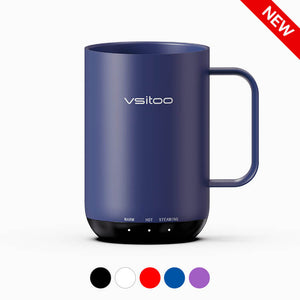
Now that you know the sweet spot is 120-140°F, the next question is: how do you keep it there? A microwave ruins flavor. A thermos keeps it too hot for too long. A regular mug lets it cool too fast. The elegant solution is a self heating coffee mug with precise temperature control.
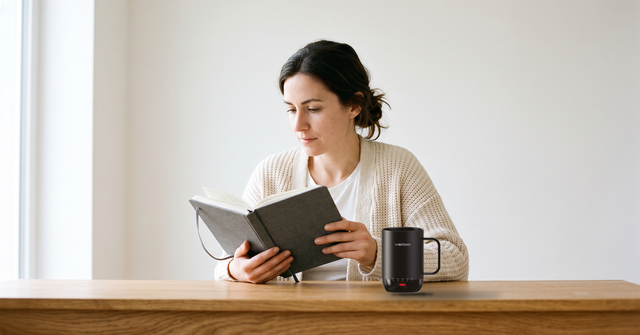
A good heated mug lets you set your preferred temperature — say, 135°F — and maintains it throughout your morning. You can sip at your own pace without rushing. Your coffee stays in that Goldilocks zone from the first sip to the last drop.
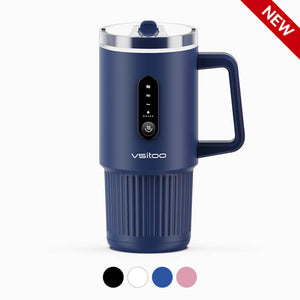
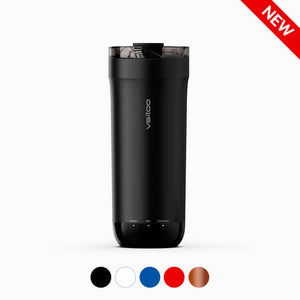
For those who need something more portable, the heated travel mug brings the same temperature control to your commute or office desk. And if you're looking for a more budget-friendly entry, the S3 Plus smart mug offers reliable heating at an accessible price point.
Final Verdict: What's the Best Temperature to Drink Coffee?
After all the science, expert opinions, and practical considerations, the answer is clear: 120-140°F (49-60°C). This range delivers maximum flavor, balanced sweetness, and comfortable drinking temperature without burning your tongue.
Whether you enjoy a complex single-origin pour-over or your reliable morning drip, knowing the optimal temperature transforms your coffee experience. And with the right tools — like a temperature-controlled smart mug — you can enjoy every single sip at perfection.
---Designed in Delaware, USA. VSITOO makes smart drinkware for people who love their coffee at the perfect temperature — every time.
Best temperature for coffee: quick reference table
| Brew method | Brewing temperature | Best drinking temperature |
|---|---|---|
| Pour over | 92-96 C / 198-205 F | 60-65 C / 140-149 F |
| French press | 93-96 C / 199-205 F | 60-65 C / 140-149 F |
| Drip machine | 90-96 C / 194-205 F | 60-70 C / 140-158 F |
| Espresso | 88-94 C / 190-201 F | 60-65 C / 140-149 F |
| Cold brew | Cold extraction, 12-18 h | 4-10 C / 39-50 F |
How long does coffee stay at the right temperature?
A regular ceramic mug loses roughly 2-3 C per minute at room temperature, so coffee drops from 75 C to the 55 C threshold in about 8-12 minutes. A double-wall insulated mug slows that to around 1 C per minute. A heated mug with active temperature control holds the set point for 2-4 hours on battery, which is the only way to stay inside the 55-65 C window without reheating.
Does reheating coffee change the taste?
Yes. Reheating accelerates oxidation of the aromatic compounds that make coffee smell fresh, and it pushes bitter compounds forward. This is why a reheated cup tastes flatter and more bitter than the same coffee held at temperature. If you drink slowly, holding the temperature is better than reheating.
Frequently asked questions
What is the best temperature to drink coffee?
Most specialty coffee professionals put the sweet spot at 55-65 C (130-150 F). At this range acidity, sweetness and aroma are balanced, and the coffee is safe to sip.
Is 70 C (158 F) too hot for coffee?
It is above the comfortable drinking range and can scald the tongue, which temporarily dulls your ability to taste. Let it cool to 60-65 C before drinking.
Why does coffee taste bitter when it cools?
As temperature drops, your perception of bitterness increases and aromatics become less volatile, so the cup tastes flatter and more bitter even though the coffee itself has not changed.
Does temperature affect caffeine content?
No. Caffeine extraction depends on brewing, not on the temperature of the finished cup. Temperature only changes how you perceive bitterness and aroma.
How do I keep coffee at 60 C without reheating?
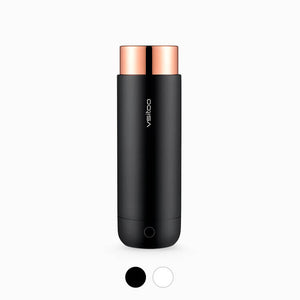
Use an insulated or actively heated mug. The S3 Pro smart mug holds 120-150 F (49-65 C) with Auto-Sensing AI, and the S5 heated travel mug does the same on the move. For water, the H1 heated travel bottle covers longer trips.
Related reading: how long can coffee sit out and why temperature control matters.
References
- National Coffee Association - coffee preparation and brewing guidance
- Harvard T.H. Chan School of Public Health - Coffee and health
- US FDA - How much caffeine is too much
- NIH / NINDS - Burn injury information
Temperature and hold-time figures for VSITOO mugs come from our own bench testing at 22°C ambient.
See the full range of smart mugs if you are comparing options before buying.
Find similar articles:
best temperature to drink coffee