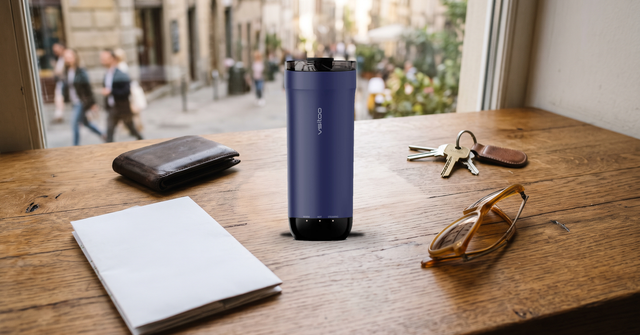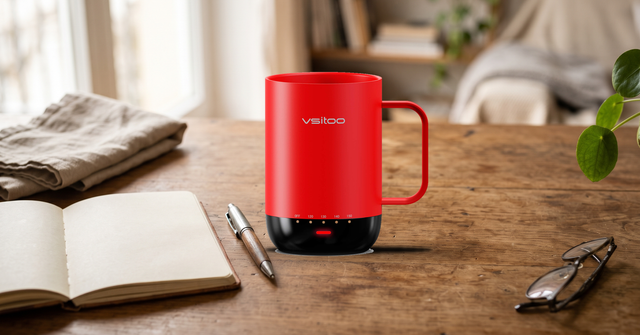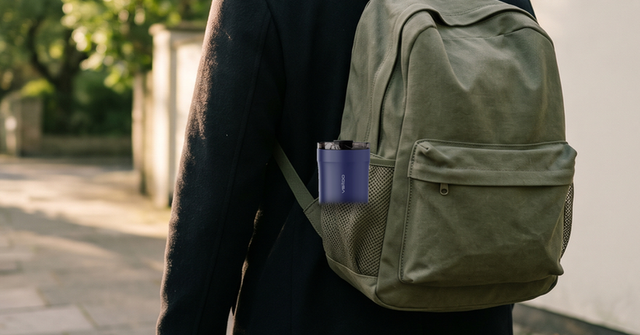
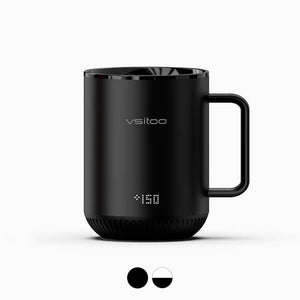
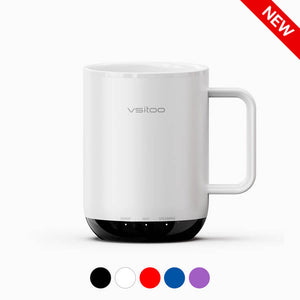
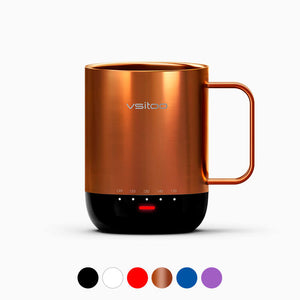
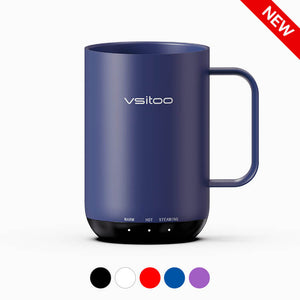
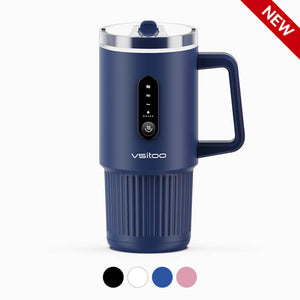
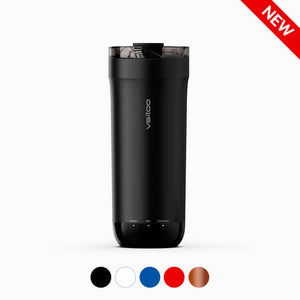
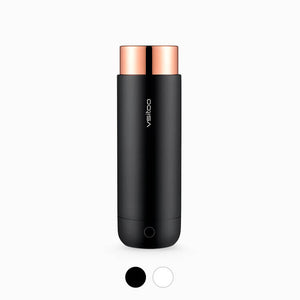
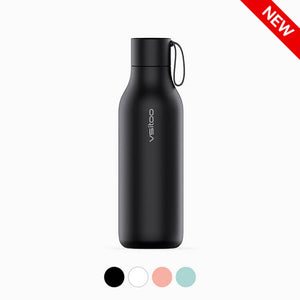
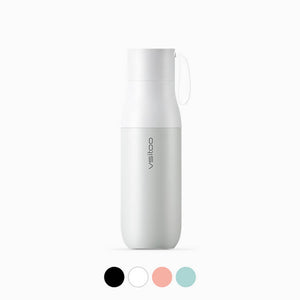
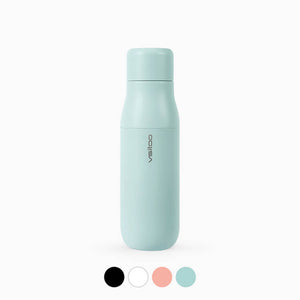
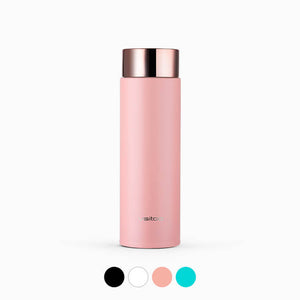
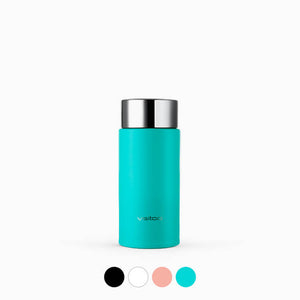
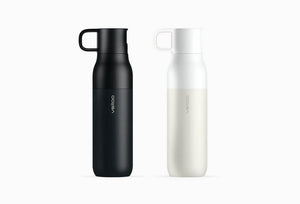


A temperature controlled coffee mug sounds like a small upgrade. It is not. A mug that holds a set temperature changes when you drink, how long you linger over a cup, and how often you reheat coffee you already paid for. The catch is that "temperature controlled" gets used loosely online, and two mugs with the same label can behave nothing alike.
Here is what the term should mean, what to measure before you buy, and where the limits sit.
Passive Insulation Is Not Control
Most hot mugs are passive. Double-wall steel or ceramic slows heat loss, then the coffee keeps falling: 180°F at the brew, 150°F after a few minutes, 120°F before a meeting ends. A coffee thermos mug can hold heat for hours, but it holds whatever temperature the drink started at, including too hot to sip.
A self heated coffee mug closes the loop. A sensor reads the liquid, a controller compares that reading with a target band, and a heating element adds energy only when the drink drifts low. Insulation slows the loss; the heater replaces it. That is the difference between a cup that cools slowly and a cup that stays put.
What a Real Temperature Controlled Coffee Mug Controls
The useful spec is a band, not a single number. VSITOO desktop mugs hold drinks between 120°F and 150°F, the range where coffee tastes sweet rather than scalding or flat. Auto-sensing control adjusts without buttons or an app, so you do not have to reset it after every refill.
Ask three questions. Does the mug measure the drink or the plate under it? Does it hold a range while you sip, or only reheat in bursts? And does it work with a half-full cup, or only when filled to the line? A heated smart mug should answer all three on the product page, not in a support email.
Capacity and the Shape of Your Morning
Control is wasted if the mug is the wrong size. A 12 oz cup suits a capsule or a single pour; the VSITOO S6 Plus sits at 12 oz. A 14 oz mug covers a standard drip serving, which is where the S3 Plus fits. The S3 Pro comes in 14 and 16 oz, and the S3 Ultra reaches 20 oz for long desk days.
Match the size to how you actually drink. A mug that is too small gets refilled twice and spends more time empty than heating. One that is too large leaves the last third sitting long enough to taste stale even at the right temperature.
Lid, Handle, and Daily Handling
A thermal coffee mug with handle is easier to carry and harder to knock over than a bare tumbler, and the handle keeps your fingers off a warm body. A lid matters just as much: it traps vapor, slows surface cooling, and keeps dust out of a cup that sits on a desk for an hour. Both parts should come off for washing without tools.
Where Electric Cup Warmers Stop
Desktop electric cup warmers are cheap and simple: a hot plate holds the bottom of any mug at a low temperature. They also fail in predictable ways. They heat from below, so the top of the drink stays cooler. They cannot read the liquid, so a thin ceramic cup and a thick steel one end up at different temperatures. And they only work where the plate is plugged in.
If your coffee never leaves one desk, a warmer can be enough. If you move between rooms, a heated mug for coffee with its own battery is the more honest tool. Neither one is a travel mug; for commuting, look at an insulated travel model instead.
A Short Buying Checklist
- Target band stated in degrees, not "hot."
- Sensor reads the liquid, not the base.
- Capacity matches your usual pour.
- Lid and handle are removable and washable.
- Battery life is quoted for your typical cup size.
- Replacement lids and chargers are sold separately, not promised by email.
Control has a cost: a powered mug needs charging, and the electronics add weight. That trade pays off for a slow desk sipper and wastes money for someone who drains a cup in five minutes.
The Bottom Line
A temperature controlled coffee mug earns its price when it holds a real band, fits your pour, and survives daily washing. Start with capacity, confirm the control method, then decide whether you need battery power or a plug. The right mug disappears into the routine; the wrong one becomes another gadget in a drawer.